Discussion
Loading...

Discussion

  • About
  • Code of conduct
  • Privacy
  • Users
  • Instances
  • About Bonfire
John Carlos Baez
@johncarlosbaez@mathstodon.xyz  ·  activity timestamp last month

Here you can see what Meitner was studying: the decay chain starting with uranium-235 that produces protactinium, then actinium, and eventually lead. All the nuclei in this decay chain have atomic mass 4n+3. The reason:

• In "α decay" a nucleus emits a helium nucleus or "α particle" - 2 protons and 2 neutrons - so its atomic number goes down by 2 and its atomic mass goes down by 4.

• In "β decay" a neutron decays into a proton and emits a neutrino and an electron, or "β particle", so its atomic number goes up by 1 and its atomic mass stays the same.

But to understand Meitner's work in context, you have to realize that these facts only became clear through painstaking work and brilliant leaps of intuition! Much of the work was done by her team in Berlin, Marie and Pierre Curie in France, Ernest Rutherford's group in Manchester and later Cambridge, and eventually Enrico Fermi's group in Rome.

At first people thought electrons were bound in a nondescript jelly of positive charge - Thomson's "plum pudding" atom. Even when Rutherford, Geiger and Marsden shot α particles at atoms in 1909 and learned from how they bounced back that the positive charge was concentrated in a small "nucleus", there remained the puzzle of what this nucleus was!

(2/n)
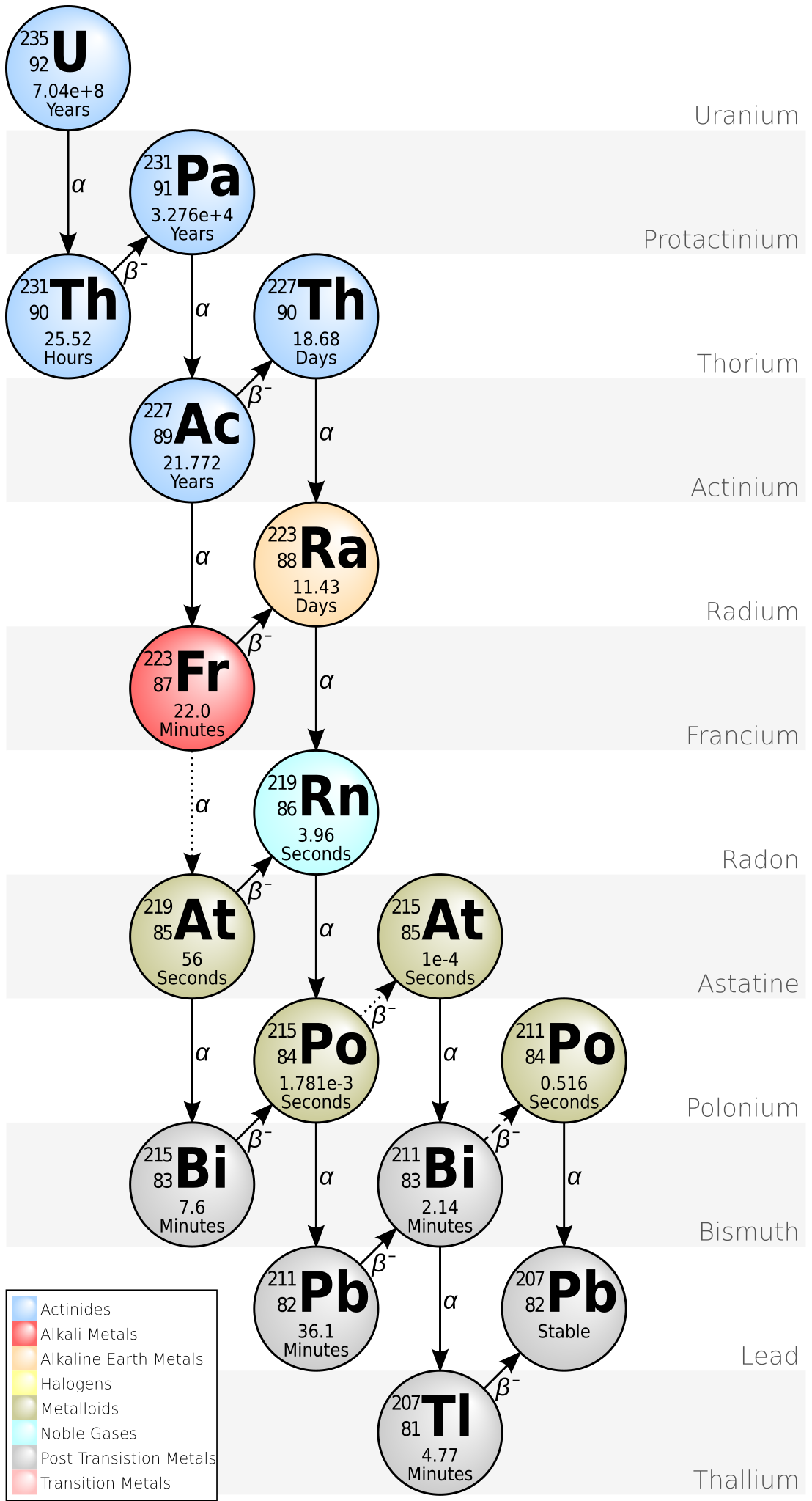
A chart of elements starting with uranium-235 and containing elements with atomic mass 4n+3.   U-235 decays to thorium-231 by emitting an alpha particle, thorium-231 decays to protactinium-231 by emitting a beta particle, protactinium-231 decays to actinium-227 by emitting a beta particle, and so on, eventually leading to lead-207.   From here:

https://commons.wikimedia.org/wiki/File:Decay_Chain_of_Actinium.svg

created by Edgar Bonet and placed under a Creative Commons Attribution-Share Alike 3.0 Unported license.
A chart of elements starting with uranium-235 and containing elements with atomic mass 4n+3. U-235 decays to thorium-231 by emitting an alpha particle, thorium-231 decays to protactinium-231 by emitting a beta particle, protactinium-231 decays to actinium-227 by emitting a beta particle, and so on, eventually leading to lead-207. From here: https://commons.wikimedia.org/wiki/File:Decay_Chain_of_Actinium.svg created by Edgar Bonet and placed under a Creative Commons Attribution-Share Alike 3.0 Unported license.
  • Copy link
  • Flag this post
  • Block
John Carlos Baez
@johncarlosbaez@mathstodon.xyz replied  ·  activity timestamp last month

In 1914 Rutherford referred to the hydrogen nucleus as a "positive electron". In 1920 he coined the term "proton". But the real problem was that nobody knew about neutrons!

Instead, people guessed that the nucleus consisted of protons and "nuclear electrons", which made its charge differ from the atomic mass. But it was completely mysterious why these nuclear electrons should act different from the others: as Bohr put it, they showed a "remarkable passivity". They didn't even have any spin angular momentum! But on the other hand, they certainly seemed to exist - since sometimes they would shoot out in the form of β radiation!

To solve this puzzle one needed to postulate a neutral particle as heavy as a proton and invent a theory of β decay in which this particle could decay into a proton while emitting an electron. But there was an additional complication: unlike α radiation, which had a definite energy, β radiation had a continuous spectrum of energies.

Meitner didn't believe this at first, but eventually her careful experiments forced her and everyone else to admit it was true. The energy bookkeeping just didn't add up properly!

(3/n)

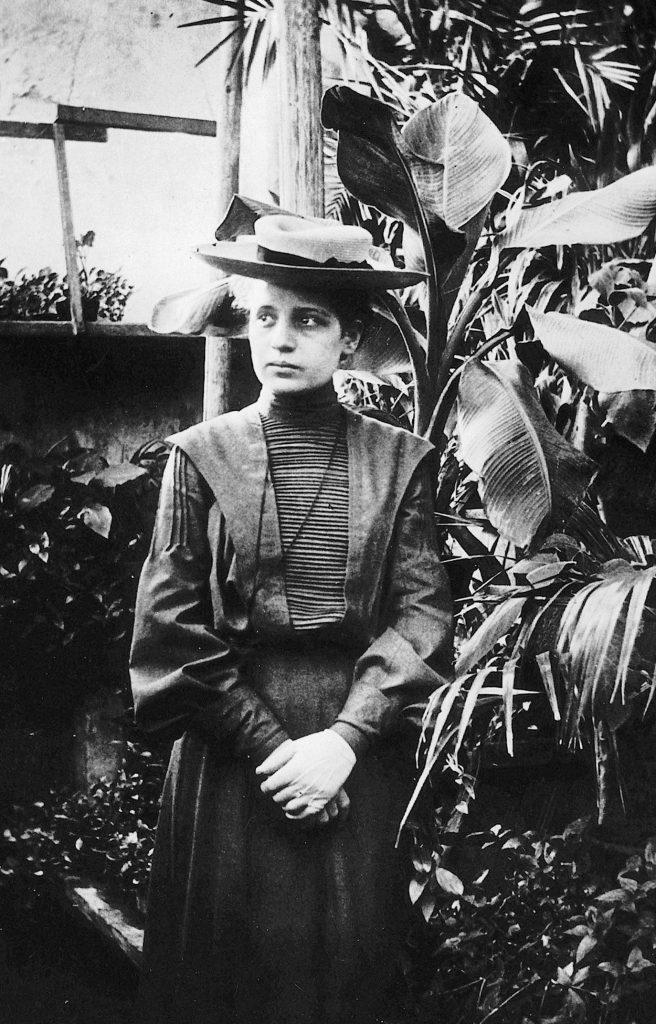
A young Lisa Meitner in a broad-brimmed hat, standing holding one hand in the other.
  • Copy link
  • Flag this comment
  • Block
John Carlos Baez
@johncarlosbaez@mathstodon.xyz replied  ·  activity timestamp last month

Meitner's discovery - that the electrons produced when neutrons decay into protons don't have a single specific energy but rather a range of energies - led to a crisis in nuclear physics around 1929.

Bohr decided that the only way out was a failure of conservation of energy! Maybe it was only conserved on average. Pauli thought of a slightly less radical way out: maybe some of the energy is carried off by yet another neutral particle, this time one of low mass.

Two mysterious unseen neutral particles was a lot to stomach! In 1931 Fermi called the big one the "neutron" and the little one the "neutrino". In 1932 Chadwick realized that you could create beams of neutrons by hitting beryllium with α particles. The neutrino was only seen much later, in the 1950s.

(I hope people remember this story when they scoff at the notion that "dark matter" makes up most of the universe: even if something is hard to see, it might still exist.)

Back to Meitner:

When Hitler gained power over Germany in 1933, her life became increasingly tough, especially because she was a Jew. In May of that year, Nazi students at her university set fire to books by undesirable writers such as Mann, Kafka, and Einstein.

By September, Meitner received a letter saying she was dismissed from her professorship. Nonetheless, she continued to do research.

(4/n)

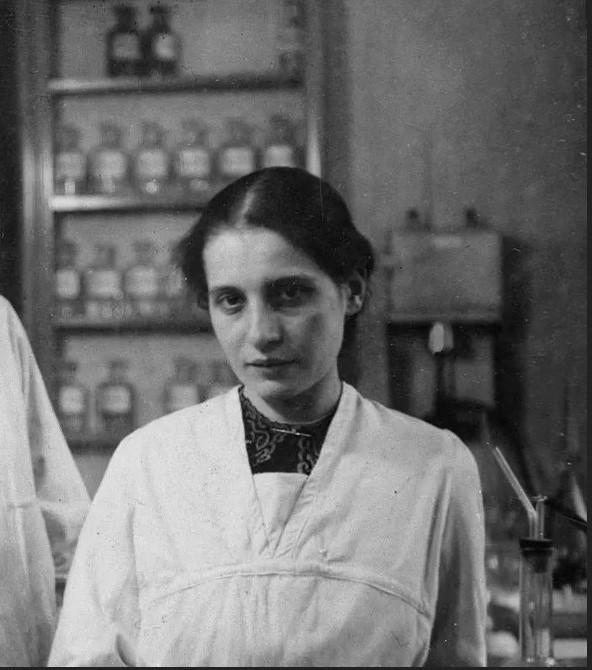
Lise Meitner in the laboratory, in a white lab coat.
  • Copy link
  • Flag this comment
  • Block
John Carlos Baez
@johncarlosbaez@mathstodon.xyz replied  ·  activity timestamp last month

In 1934, Fermi started trying to produce "transuranics" - elements above uranium - by firing neutron beams at uranium. Meitner got excited about this and began doing the same with Hahn and another chemist, Fritz Strassman. They seemed to be succeeding, but the results were bizarre: the new elements seemed to decay in many different ways! Their chemical properties were curiously variable as well. And the more experiments the team did, the stranger their results got.

No doubt this is part of why Meitner took so long to flee Germany. Another reason was her difficulty in finding a job. For a while she was protected somewhat by her Austrian citizenship, but that ended in 1938 when Hitler annexed Austria. After many difficulties, she found an academic position in Stockholm and managed to sneak out of Germany using a no-longer-valid Austria passport.

She was now 60. She had been the head of a laboratory in Berlin, constantly discussing physics with all the top scientists. Now she was in a country where she couldn't speak the language. She was given a small room to use a lab, but essentially no equipment, and no assistants. She started making her own equipment.

Hahn continued work with Strassman in Berlin, and Meitner attempted to collaborate from afar, but Hahn stopped citing her contributions, for fear of the Nazis and their hatred of "decadent Jewish scence". Meitner complained about this to him. He accused her of being unsympathetic to *his* plight.

(5/n)

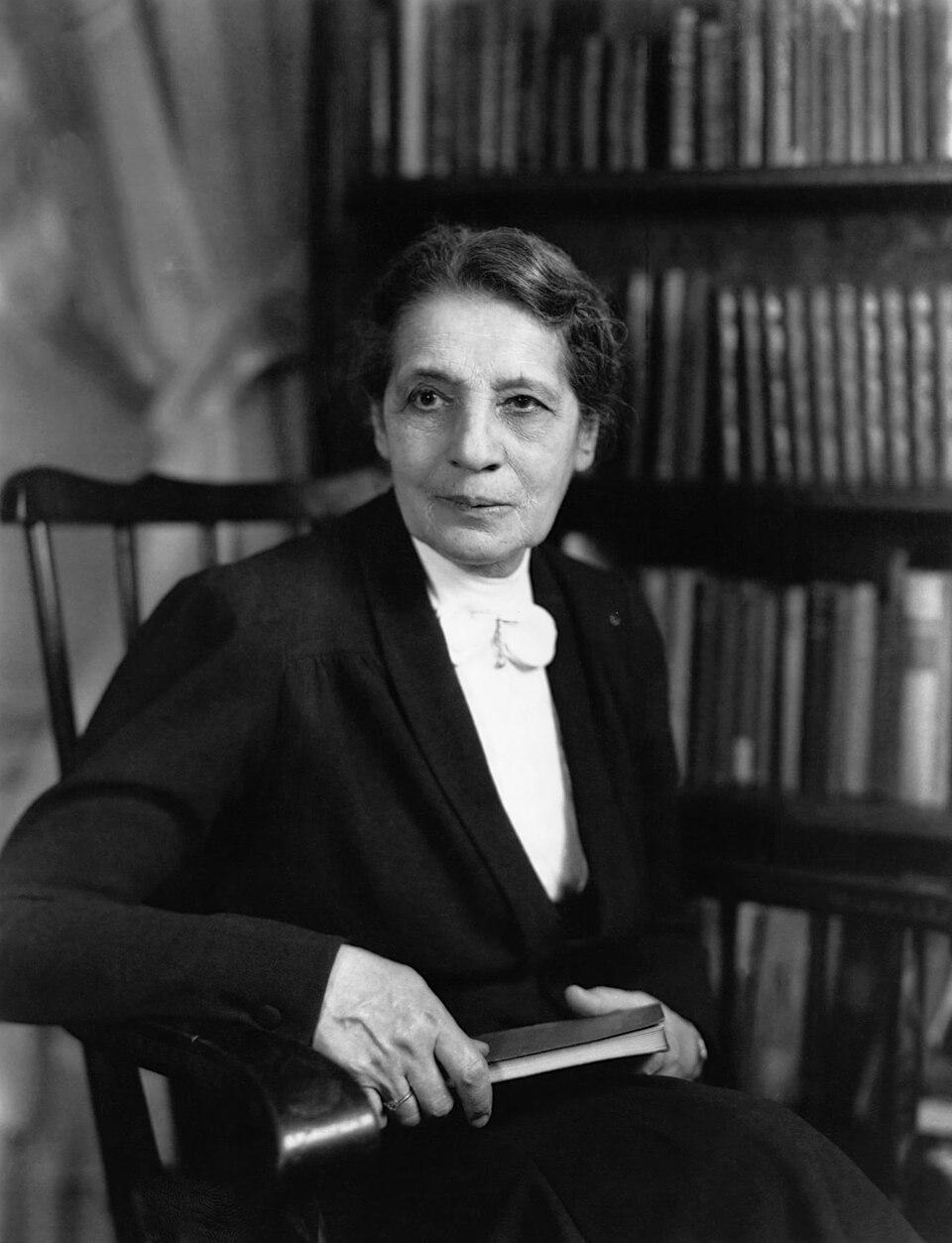
An older Lise Meitner sitting in a library, holding a closed notebook.
  • Copy link
  • Flag this comment
  • Block
John Carlos Baez
@johncarlosbaez@mathstodon.xyz replied  ·  activity timestamp last month

Given Lise Meitner's very tough situation, and Hahn's complaints to her, it's no surprise that she wrote to him:

"Perhaps you cannot fully appreciate how unhappy it makes me to realize that you always think I am unfair and embittered, and that you also say so to other people. If you think it over, it cannot be difficult to understand what it means to me that I have none of my scientific equipment. For me that is much harder than everything else. But I am really not embittered - it is just that I see no real purpose in my life at the moment and I am very lonely...."

What *is* a surprise is that this is when she made her greatest discovery.

She couldn't bear spending the Christmas of 1938 alone, so she visited a friend in a small seaside village, and so did her nephew Otto Frisch, who was also an excellent physicist. They began talking about physics. According to letters from Hahn and Strassman, one of the "transuranics" was acting a lot like barium.

Talking over the problem, Meitner and Frisch realized what was going on: the neutrons were making uranium nuclei split into a variety of much lighter elements!

In short: fission.

(6/n)

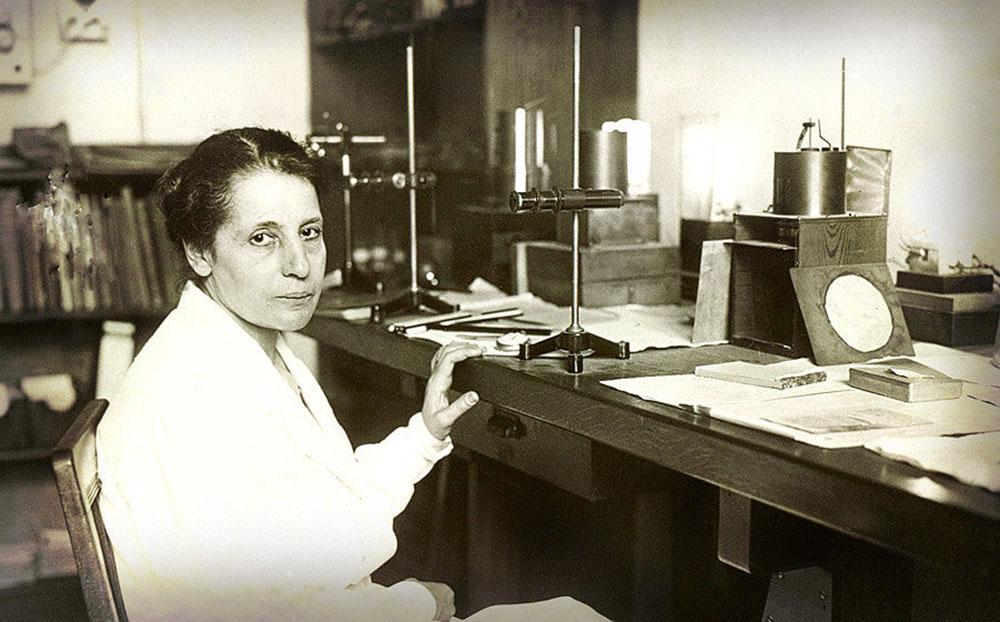
An older Lise Meitner in a white lab coat sitting in front of her desk, turning toward the camera.
  • Copy link
  • Flag this comment
  • Block
Log in

Open Science

We are a network of scientists, developers and organizations building the next generation of digital spaces for open science.

Open Science: About · Code of conduct · Privacy · Users · Instances
Bonfire open science · 1.0.0-rc.4.1 no JS en
Manual federation enabled
  • Explore
  • About
  • Members
  • Code of Conduct
Home
Login