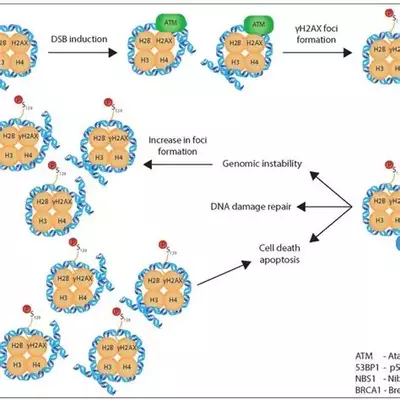
Huntington's disease treated for first time
L: https://www.bbc.com/news/articles/cevz13xkxpro
C: https://news.ycombinator.com/item?id=45358940
posted on 2025.09.24 at 07:37:30 (c=0, p=5)
Prof. & Researcher focused on #Bioanalytics, #Bioinformatics, #Pharma, Human #diagnostics (#LiquidBiopsy) and a bit #Forensics
- Joined
- Also on
-
@RoedigerRG@social.anoxinon.de
Hurra und Gratulation! 👏🏆 Alle vier Gewinner*innen unseres #Europapreis‘ 2025 wurden beim EU Contest for Young Scientists #EUCYS in Riga ausgezeichnet. Ein toller Erfolg für "Team Germany"!!!
Alle Einzelheiten zu den Preisen und Projekten der Jungforscher*innen:
👉 https://www.dfg.de/de/service/presse/pressemitteilungen/2025/pressemitteilung-nr-29
"As of 2026, Sorbonne University will no longer submit data to the Times Higher Education (THE) World University Rankings. The decision comes as part of a wider approach to promote open science and reform research assessment, in accordance with the university’s commitment to the CoARA Agreement and the Barcelona Declaration. Sorbonne University is choosing open and transparent databases to assess its academic performance."
sorbonne-universite.fr/en/ne...
#CoARA #TimesHigherEducation #OpenScience #Sorbonne
🌱 Using ‘compelling’ methods, including #CryoET, researchers mapped spinach thylakoid membranes at single-molecule precision, revealing how photosynthetic complexes are organised and settling long-standing debates on chloroplast architecture.
https://elifesciences.org/articles/105496?utm_source=mastodon&utm_medium=social&utm_campaign=organic_assessment
Great news 🎉🌟📝🚀: Die DFG hat unser Projekt "Prädiktives Wissen ist Macht: Ethik und Recht kollektiver Privatheit in der Datengesellschaft" bewilligt! (mit @HannahRuschemeier )
Wir untersuchen aus ethischer und rechtlicher Perspektive die gesellschaftstrukturellen Gefahren prädiktiver KI-Anwendungen im Sinne normativer, kritischer Grundlagenforschung.
https://rainermuehlhoff.de/DFG-project-predictive-knowledge/
@RainerMuehlhoff@chaos.social @dfg_public@wisskomm.social @HannahRuschemeier@fediscience.org
💪
Welche rechtlichen Aspekte werden Gegenstand sein?
Bei den #Medienrechtstagen an der #BTU_CS befassen wir uns dieses Jahr auch mit einigen Themen zu KI, elektronische Akten und den EU AI Act – mit Fokus auf Gerechtigkeit, Datenschutz und rechtskonforme Umsetzung..
b-tu.de/news/artikel/29132-c...
#AIAct #Recht #KI
Meanwhile, would you like to help us organize #Akademy2026? The Call for Hosts is open. Send us your proposal... But be quick! Deadline for reception of proposals is Oct 1st.
More info: https://akademy.kde.org/news/2025-07_akademy-2026-call-for-hosts/
The full report of what happened at #Akademy2025 is now live. Includes full descriptions of all the talks and never before seen pictures (?) of people giving talks!
https://akademy.kde.org/news/2025-09_akademy-2025-report/
Videos coming soon!
@pangolin thank you for this nice summary.
I hope it is a bit of help for you. Do you have a link to your package?
Academic musings about licences
@HydrePrever@mathstodon.xyz To be honest, it is not possible to answer your question.
What is your aim? Your decision finally reflects more or less a balance between philosophical open source ideals, practicalities regarding package dependencies, and your personal or institutional goals for code sharing.
Here is my academic insight.
These licenses are legal contracts. Choosing a license for an R package depends on how much control and openness is desired for the code, compatibility with dependencies, and philosophical stance about software freedom vs. permissiveness. You are right, the most common licenses on CRAN are MIT, BSD‑3, GPL‑2/3, Apache 2.0, MPL 2.0.
For example the GPL-3 is a strong copyleft license, meaning any derivative works must also be licensed under the GPL. In contrast, the MPL 2.0 is a weak copyleft license, since only the modified files must remain under MPL, while rest can stay proprietary. It guarantees freedom for users to share, modify, and distribute modified versions, but all such derivatives must also be open-sourced under the same terms. If the package links (statically or dynamically) to other GPL-licensed software, it almost always needs to be GPL as well. The viral nature of the GPL means it enforces openness, which some see as a benefit for building a truly open ecosystem, but others view as restrictive if they want their code used in closed or commercial contexts. If maximizing openness and ensuring all derivatives remain open source is important, GPL-3 is the best fit.
In contrast, The MIT (and BSD-3) license is simple most common and highly permissive ("least friction"). It lets anyone use, copy, modify, merge, publish, distribute, sublicense, and sell copies of the software, as long as the original copyright and license notice remain. MIT is well liked for its simplicity and minimal restriction, making it a go-to for developers who want the broadest adoption with the least friction. Importantly, MIT-licensed code can be re-used in both open and closed source projects. For maximally broad reuse, minimal restrictions, and commercial friendliness, MIT is generally preferred. IIRC, Apache 2.0 is also permissive with an explicit patent grant, and it includes a clause that protects against contributor lawsuits. But I am not so sure about this.
CC0 ("No Rights Reserved") is basically a public domain dedication for the code (rare on CRAN), waiving as many rights as legally possible. ImageJ is not CC0 but public domain. This app became the defacto standard for many doing image analysis. It’s ideal for pure data packages or code that the author wants to be maximally reused without even attribution. However, it is less common for code and may cause confusion, as many open source projects and organizations are more familiar with MIT or GPL. For pure data or works intended to be fully in public domain, CC0 is appropriate.
Other licenses include Apache 2.0, BSD, MPL or even more restrictive proprietary licenses. Each comes with its own nuances, such as patent clauses (Apache) or specific attribution requirements (BSD). CRAN policies generally expect open source licenses, and proprietary licenses are not accepted for public packages.
I have MIT and GPL licensed packages on CRAN, and I am fine with both.
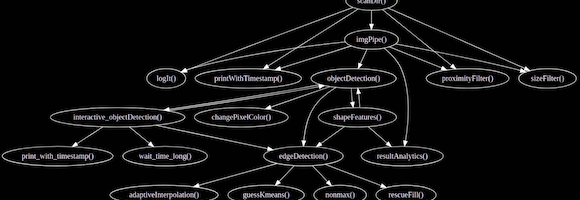
Happy Linux Day, to those who celebrate.
Linux v0.01 was uploaded on 17-Sep 1991.
https://lkml.iu.edu/hypermail/linux/kernel/2109.2/03485.html
Tatsächlich sieht die DFG auch die vielfältigen Herausforderungen der Publikationspraxis und bearbeitet diese auf mehreren Ebenen, z.B. durch den Auf-/Ausbau wissenschaftsgeleiteter Open-Access-Infrastrukturen oder des Publikationsmodells Diamond OA. Bei der DFG-Positionierung zum wissenschaftl. Publizieren finden sich noch mehr Hintergrund- und weiterführende Infos zum Thema:
https://fcld.ly/position
https://fcld.ly/ll15
🕵️♂️ How anonymous is anonymous?
In his PhD, Dr. Sebastian Pahl studied the security of the Tor network, uncovering weaknesses but also ways to improve anonymity & performance.
The research was a collaboration between Hof University and the University of Luxembourg, supervised by Prof. Dr. Florian Adamsky. 🌐🔐
#dieforschendehochschulehof #hierwirdknallhartgeforscht #ScienceMastodon #CyberSecurity #Tor #Research #AnonymityOnline #Anonymous
AI Scientist-v2 Passes ICLR Peer Review Workshop
The first nerve net connectome is here, and it belongs to a comb jelly. This ancient lineage could crack open research into the evolution of sensory motor coordination, researchers say.
By Siddhant Pusdekar
DGKM in Landshut
Landshut with view on the the Cathedral of St. Martin with its bell tower
Today marks the conclusion of my internship at @tuberlin 🎓 I had an incredible research experience, thanks to my supervisor, Professor Mario Birkholz (see picture), and my advisors, Professor Anders Henriksson and Phillip Schrenk.
During this time, I learned about the innovative technology of silicon optical sensors 🔬💡 and developed as a researcher by enhancing my data collection methods 📊 and improving the experimental setup. ⚙️ I also honed my skills in interpreting numerical data 📈 and testing hypotheses.
Great that you enjoyed your stay.
Today marks the conclusion of my internship at @tuberlin 🎓 I had an incredible research experience, thanks to my supervisor, Professor Mario Birkholz (see picture), and my advisors, Professor Anders Henriksson and Phillip Schrenk.
During this time, I learned about the innovative technology of silicon optical sensors 🔬💡 and developed as a researcher by enhancing my data collection methods 📊 and improving the experimental setup. ⚙️ I also honed my skills in interpreting numerical data 📈 and testing hypotheses.